Sri Lanka’s reputation was written in tea. Before that, the island was Ceylon coffee — once among the world’s great origins, then nearly lost to leaf rust and the pivot to Camellia. Higher still, in the central highlands, a quieter crop has been tended for generations: Arabica, grown between 1,200 and 1,800 metres, where nights are cool and the morning sits in mist.
What remains is scarce on the global map: specialty lots from shade-grown Kandyan gardens, coffee beside pepper, clove, and nutmeg, not from monoculture plains. The Ceylon name already travels. The bean does not need a blend to introduce itself.
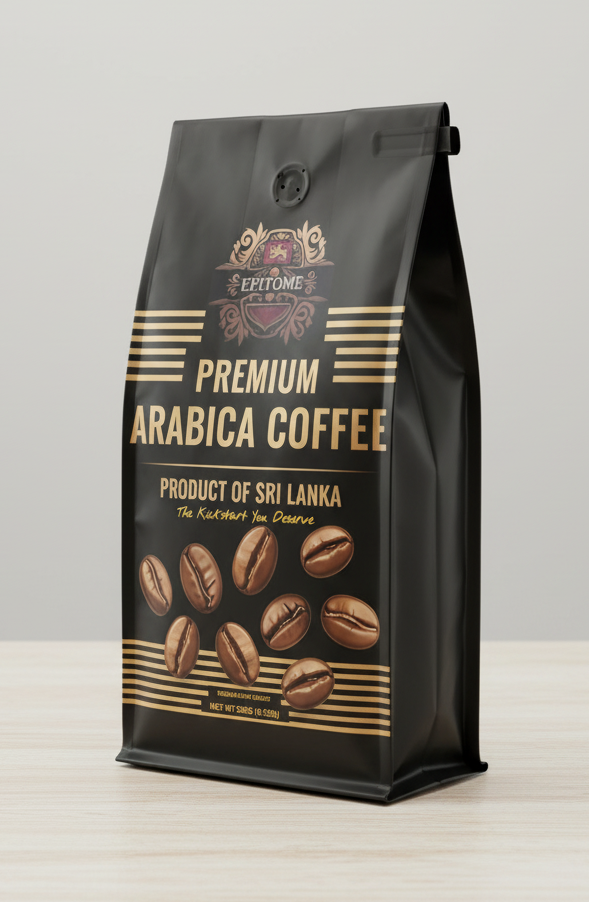
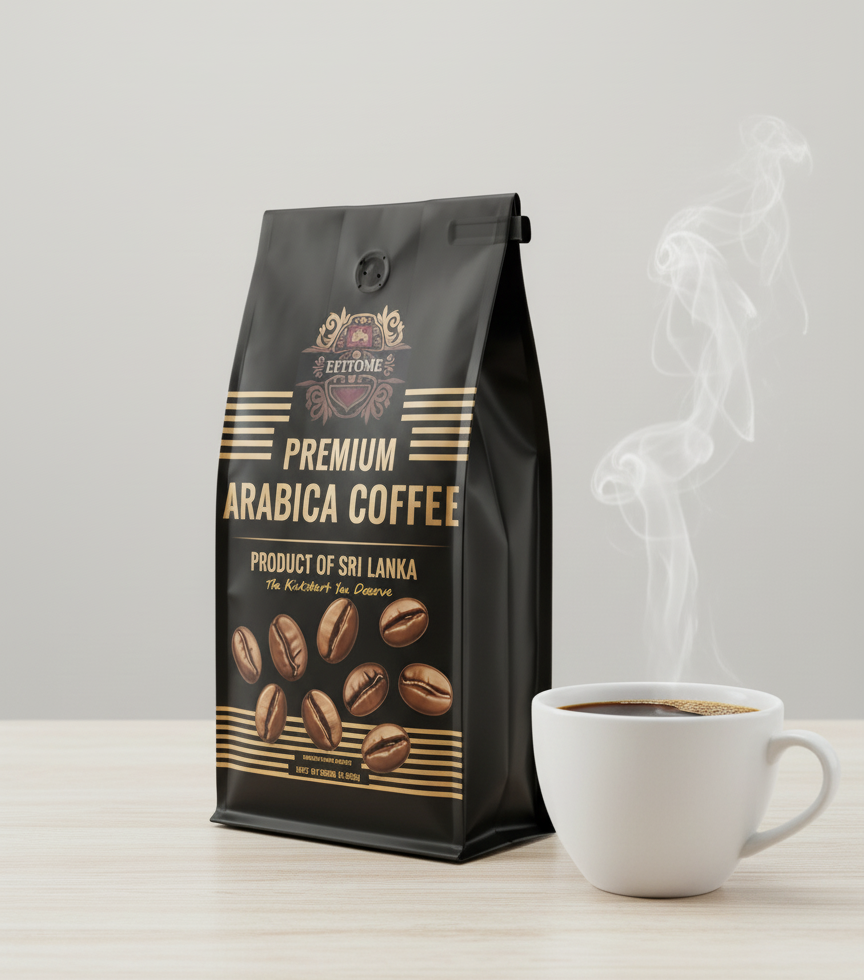
Epitome is that crop, kept as a single expression. No blend to soften the soil. No second roast to hide a fault. Chocolate depth, vanilla warmth, and a clean stone-fruit finish — the character of highland Sri Lanka, packed in one black-and-gold bag.
Ceylon Arabica sits in a balanced middle against the giants: less polarizing than Ethiopia’s floral, high-acid cups, with more sweetness and spice than a standard washed Latin lot. Moderate acidity, a silky body — honest as pour-over, structured enough for espresso. We work with farming families on those slopes and roast in small lots after you reserve. What reaches you is not warehouse coffee. It is the current harvest, roasted for the cup you will actually drink.